

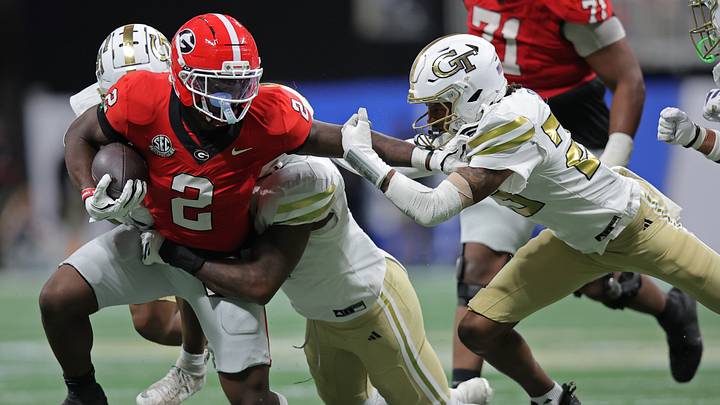
The 24-team expanded edition of the College Football Playoff is coming, like it or not, and one of the biggest arguments against this move is that it will devalue the regular season and, more importantly, some traditionally important games.
The biggest victims of this change might not be meaningless November games. They could be the rivalry games that have defined college football for generations. Under a 24-team format, a 10-1 team could conceivably enter rivalry weekend knowing its playoff spot is secure. Depending on the eventual seeding and qualification rules, a loss might have little effect on postseason position.
At that point, a coach could face an uncomfortable decision: Is beating your biggest rival worth risking your starting quarterback, star running back, or best defensive player when you could have as many as five additional postseason games ahead?
Is the possibility of extending the season worth risking fatigue for a game that will have zero bearing on how you start the postseason? The risk isn't necessarily entire teams sitting their starters. It's coaches becoming more conservative about injuries, snap counts, and playing through pain.
And while coaches would face enormous pressure not to sit starters against rivals, we've already seen how much player availability changes when postseason priorities take precedence. The personnel chess match can matter more than winning a rivalry game in the end.
A 24-team College Football Playoff could put a historic Georgia rivalry at risk
College football has spent generations convincing us that every Saturday matters. A 24-team playoff could create a world where the biggest games of the year matter more to the fans than they do to the coaches making personnel decisions.
In the case of Georgia, the sheen of the season finale against Georgia Tech could quickly dull.
Clean, Old-Fashioned Hate is one of college football's oldest rivalries, a game that means everything to both sides regardless of records or rankings. But under a 24-team playoff, it's not difficult to imagine Georgia entering the final weekend of the regular season with its postseason spot already secured.
Suddenly, a game that has traditionally carried enormous weight could become little more than a postseason tune-up for the Bulldogs. "We run this state" could lose most of its meaning.
Imagine Kirby Smart preparing for Georgia Tech with his starting quarterback nursing a sore shoulder and his best running back dealing with an ankle injury. Georgia is already safely in the playoff field, and a loss to the Yellow Jackets isn't going to change that.
What incentive does Smart have to put those players in harm's way?
He'd certainly want to beat Georgia Tech. Nobody who understands this rivalry would question that. But wanting to win and needing to win are two very different things, particularly when a national championship could require another four or five games.
Georgia Tech wouldn't necessarily benefit from that arrangement, either.
Sure, the Yellow Jackets would gladly take a victory over their biggest rival, especially GT head coach Brent Key. But beating a Georgia team that is more concerned with staying healthy than winning the game isn't quite the same as knocking off the Bulldogs at full strength.
The rivalry deserves better than becoming a glorified exhibition for one team and the biggest game of the season for the other. Rivalry games became what they are because they matter to both sides, and the bragging rights have weight.
Kirby Smart would never admit that beating Georgia Tech doesn't matter. But a 24-team playoff could create a situation where protecting his players matters more.
The NFL has already shown us what happens when postseason positioning becomes more important than winning a regular-season finale. Teams routinely rest key players once their playoff situations are settled. It's a perfectly reasonable strategy in a sport where championships are the ultimate goal.
But college football isn't the NFL, and the final weekend of its regular season isn't just another collection of games. It's the weekend that gives us Georgia–Georgia Tech, Alabama–Auburn, and Ohio State–Michigan.
Saving college football's greatest rivalries could mean breaking another tradition
Perhaps the only way to protect historic rivalries like Clean, Old-Fashioned Hate from the unintended consequences of playoff expansion would be to move them earlier in the season. And that would create an entirely different problem.
Imagine Georgia and Georgia Tech meeting in early October instead of Thanksgiving weekend. At that point, Georgia would almost certainly still have plenty riding on every victory, making it much more difficult for Kirby Smart to justify resting key players with an eye toward the postseason.
The same could be said for Alabama and Auburn, Ohio State and Michigan, or Texas and Texas A&M. Moving those games earlier would reduce the likelihood of either team entering with its playoff fate already decided.
But at what cost?
The Iron Bowl has become synonymous with Thanksgiving weekend. Ohio State and Michigan have spent generations defining their seasons by what happens in the final game. Georgia and Georgia Tech have built their own Thanksgiving traditions around Clean, Old-Fashioned Hate.
Moving those games might help preserve their competitive importance, but it would strip away part of what makes them special in the first place. Imagine having to munch on Halloween candy instead of Thanksgiving turkey as you watch the Dawgs and Jackets.
Even that solution wouldn't completely fix the problem. Moving these games to October might ensure both teams have something left to play for, but it wouldn't necessarily make losing them as consequential as it once was.
And therein lies the problem with expanding the playoff to 24 teams. While trying to create more meaningful postseason football, the College Football Playoff could end up fundamentally changing the regular-season traditions that made the sport so popular.
The rivalries wouldn't disappear. But the Saturday afternoons that generations of supporters have circled on their calendars might never feel quite the same. College football shouldn't have to choose between protecting its greatest rivalries and preserving the traditions that made them great, and neither should the fans.
 Add us as a preferred source on Google