

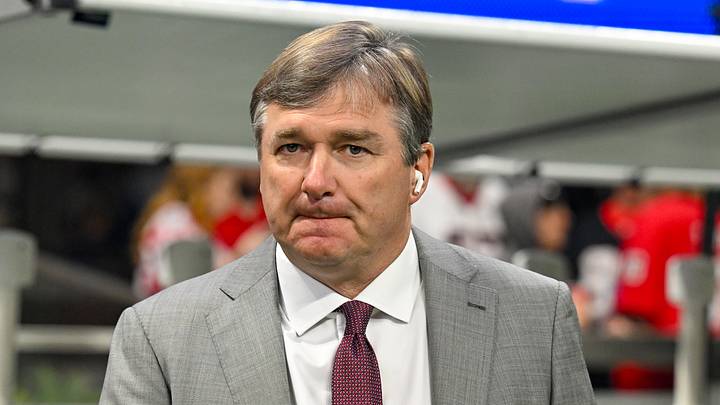
Kirby Smart has never been shy about expressing what the SEC Championship Game means to him, his players, the Georgia football program, or the Southeastern Conference as a whole. He's always referred to it as "special".
He's celebrated its importance, embraced the challenge of playing for an SEC title, and repeatedly treated winning the SEC as an accomplishment worthy of recognition. But with college football moving toward a 24-team playoff and conference championship games now casualties of expansion, Smart isn't interested in getting sentimental.
The Georgia head coach was given an opportunity to reflect on what losing the SEC Championship Game would mean to the sport. Instead, he offered a much simpler perspective.
Times are changing, and everyone has to adapt.
Kirby Smart on a 24-team CFP and the SEC title game going away: “Times, they are changing. And as they change, you’ve got to adapt with it.” #DawgNation pic.twitter.com/PYVjw7jV9a
— DawgNation (@DawgNation) November 9, 2026
It's not necessarily the emotional response some Georgia fans might expect from a coach who has built so much of his success around competing for championships in Atlanta. But also probably one of the most Kirby Smart answers you'll hear. A coach who devotes none of his energy to the things he cannot control.
And that's exactly the kind of response that explains why Smart has been so successful.
Kirby Smart isn't looking backward as college football prepares for major changes
There's something almost ironic about Smart's reaction to the dismantling of the SEC Championship Game.
Smart is a coach who understands SEC history better than most. He played at Georgia during an era when the SEC Championship Game was already becoming one of college football's defining events. As an assistant at Alabama and later the head coach of the Bulldogs, he experienced firsthand what winning the conference meant.



Under his leadership, Georgia has made the SEC Championship Game a familiar destination, turning trips to Atlanta into an expectation rather than an occasional achievement, and not once did he ever treat those appearances as meaningless or a burden.
The SEC title has represented something bigger than simply earning another trophy. It's been a measuring stick for competing against the best programs in the country's toughest conference. That history makes his unwillingness to mourn its disappearance all the more interesting.
He's not suggesting the game doesn't matter. He's acknowledging that the sport he coaches today isn't necessarily going to resemble the one he grew up playing, and complaining about that reality isn't going to help Georgia win its next football game or reach its goals for the season.
There's a lesson in that approach.
College football has undergone a huge shift in recent years. The transfer portal, revenue sharing, conference realignment, and playoff expansion have altered how programs go about their business. Coaches can spend their time criticizing those changes, or they can figure out how to succeed within them.
Smart has made it clear which approach he prefers. That doesn't mean he has to love every decision being made by the people running the sport and determining its future. It simply means he recognizes that his responsibility isn't to preserve the past. He's here to prepare Georgia for whatever comes next.
And Georgia's ultimate objectives aren't changing. The Bulldogs still want to compete for conference championships. They still want to beat their biggest rivals. They still want to be standing at the end of the season with an opportunity to claim a national title.
Whether that journey includes a December trip to Atlanta or a different postseason path, Smart's expectations aren't going anywhere. That's why his reaction shouldn't be mistaken for indifference. It's more pragmatic than indifferent.
For Bulldogs fans, losing one of college football's great traditions is understandably disappointing. But for Kirby Smart, the next opponent matters more than yesterday's traditions. And if college football is determined to change the rules, don't expect Georgia's head coach to waste much time mourning what used to be.
He's already focused on figuring out how to win under whatever comes next.
 Add us as a preferred source on Google