

College football has become a high-priced game of roster roulette. Every offseason, programs chase expensive transfers, promise immediate opportunities, and spend millions trying to assemble a championship contender. Roster construction in college football has more closely resembled NFL free agency in recent years.
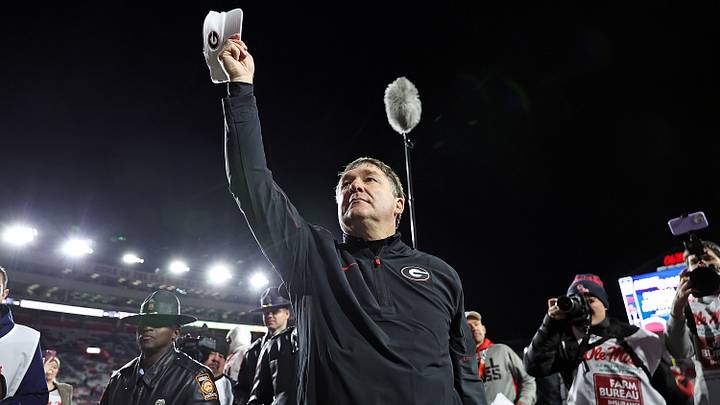
Meanwhile, Kirby Smart has been doing something remarkably different at Georgia, and the numbers would indicate that his approach is working.
According to data from Stats Perform, as reported by The Wall Street Journal, an astounding 91.4 percent of Georgia's roster has never played for another Division I program. That's the highest percentage among FBS teams.
Georgia leads FBS with 91.4% of its roster having never played for another Division-1 program, per WSJ. https://t.co/pQIcidThQa
— Brandon Zimmerman (@BZSEC) November 4, 2026
In an era when players routinely change schools like they would socks, and coaches treat the transfer portal like free agency, Georgia has become a shining example of roster continuity and stability. It's not because Smart refuses to adapt. It's because he understands something that too many programs seem to have forgotten.
Building a championship program and buying a collection of talented players aren't necessarily the same thing.
Kirby Smart is proving Georgia doesn't need to chase every expensive transfer
Make no mistake, Georgia isn't operating on a shoestring budget; there's no shortage of funds from Georgia's boosters or their NIL funds. The Bulldogs have substantial resources, and Smart isn't afraid to use them. How he chooses to use them is what makes Georgia different.
There's a huge difference between spending money to keep the players you've developed and throwing massive contracts at transfers who might only spend one season in your program. Smart has consistently leaned into the former.
Georgia has continued recruiting elite high school talent, developing players within its system, and rewarding those who embrace the program's culture. That doesn't mean Smart completely ignores the transfer portal. When there's a player who fills a legitimate need and fits what Georgia is building, the Bulldogs are willing to make a move.
But Smart isn't interested in treating every offseason like an auction.
He's betting that a player who has spent multiple seasons learning Georgia's system, understanding its expectations, and building relationships with teammates can provide things that aren't always available on the open market.



Continuity, bonding, and chemistry.
In today's college football landscape, that might be one of the most undervalued advantages a program can possess. Georgia's roster retention is especially remarkable, considering how easy it has become for players to leave when they aren't immediately satisfied with their role.
Smart has created an environment where players are willing to invest in their development rather than constantly searching for the next opportunity.
Quarterback Gunner Stockton is a perfect example. Instead of becoming impatient and leaving Georgia while waiting for his opportunity, Stockton stayed, developed, and eventually became the leader of Georgia's offense. That's the kind of patience and commitment Smart wants throughout his program.
Georgia's sustained success challenges college football's quick-fix mentality
There's nothing inherently wrong with using the transfer portal aggressively. Some programs have enjoyed tremendous success doing exactly that. But too often, we see that success as fleeting, and the program is left needing to invest even more money to replace the replacements or keep them around.
Beyond the roster churn issues, the constant pursuit of immediate upgrades creates its own challenges. Every incoming transfer must learn a new system, develop chemistry with unfamiliar teammates, and adjust to a different coaching staff.
Other programs might experience explosive growth by assembling expensive transfer classes. Some will turn those investments into championships. Others will discover that buying talent doesn't automatically produce lasting success.
Smart has successfully avoided turning Georgia into a revolving door, and the results speak for themselves.
Two national championships, multiple SEC titles, and a program that has remained among college football's elite while the sport has undergone a dramatic transformation, both financially and structurally.
Smart isn't trying to "win the offseason". He's trying to build a program capable of winning every season. And while the rest of college football debates how much money it takes to purchase a championship roster, Georgia's remarkable 91.4 percent statistic offers a blunt reminder.
Sometimes the smartest investment isn't finding someone new. It's keeping and developing the players who already believe in what you're building.
 Add us as a preferred source on Google